
What are the challenges of the ticketing system?
What are the challenges of the ticketing system?
Ticketing systems are essential tools for managing customer inquiries, issues, and service requests, but they come with their fair share of challenges. While ticketing systems offer numerous benefits for managing and resolving customer inquiries and issues, they also present several challenges that organizations may encounter:
1) Ticket Volume and Backlog:
High ticket volumes can lead to backlogs, where support teams struggle to keep up with incoming requests. This can result in longer response times, delays in issue resolution, and decreased customer satisfaction.
2) Ticket Triage and Prioritization:
Effectively triaging and prioritizing tickets is essential for managing workload and ensuring that critical issues are addressed promptly. However, determining the urgency and priority of each ticket can be challenging, especially when faced with a large volume of incoming requests.
3) Communication Overload:
Managing communication with customers and internal stakeholders across multiple tickets can become overwhelming. Keeping everyone informed of ticket status updates, resolution progress, and next steps requires effective communication and coordination.
4) Knowledge Management:
Maintaining an up-to-date knowledge base with relevant articles, FAQs, and solutions is crucial for empowering support agents and enabling self-service for users. However, ensuring the accuracy, completeness, and accessibility of knowledge base content can be challenging, particularly in dynamic environments.
5) Ticket Duplication and Redundancy:
Duplicate tickets, where multiple users report the same issue separately, can create confusion and redundancy in the ticketing system. Identifying and consolidating duplicate tickets requires careful monitoring and deduplication processes.
6) Escalation and SLA Compliance:
Meeting service level agreements (SLAs) and effectively escalating tickets to higher-level support tiers or management when necessary can be challenging. Failure to adhere to SLAs can result in customer dissatisfaction and penalties, while ineffective escalation can lead to delays in issue resolution.
7) Integration and Automation:
Integrating the ticketing system with other IT systems and tools, such as monitoring systems, CRM platforms, and collaboration tools, can enhance efficiency and streamline workflows. However, achieving seamless integration and implementing automation features require careful planning and technical expertise.
8) Data Security and Privacy:
Ticketing systems contain sensitive information about customers, including personal data and details of their inquiries or issues. Ensuring the security and privacy of this data, including compliance with data protection regulations, is essential to maintain trust and confidentiality.
9) Training and Support:
Providing comprehensive training and ongoing support for help desk agents and users is essential for maximizing the effectiveness of the ticketing system. However, ensuring that users are adequately trained and support resources are available can be challenging, especially in large organizations with diverse user populations.
10) Continuous Improvement:
Continuously monitoring and improving the ticketing process, workflows, and system performance is essential for optimizing support operations and enhancing customer satisfaction. However, identifying areas for improvement and implementing changes effectively require ongoing analysis, feedback, and collaboration across the organization.
Addressing these challenges requires proactive management, effective communication, and a commitment to continuous improvement to maximize the benefits of the ticketing system and deliver exceptional customer support.
Explore Creative Social Intranet
Boost Understanding with Quick Answers
Our Latest Intranet News and Articles
How Digital Workplace Solutions Improve Internal Communication in India?
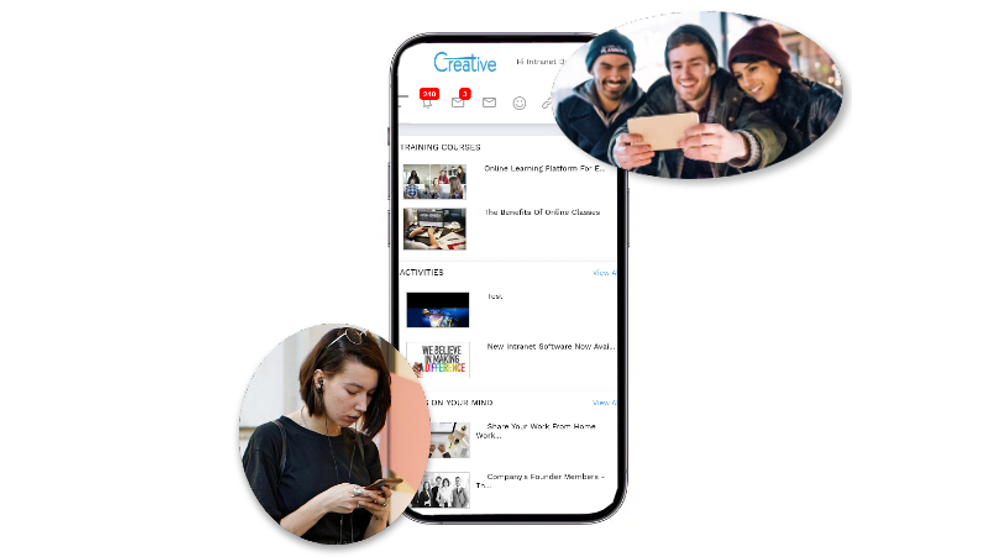
Introduction In today’s fast-paced corporate environment, organizations across India are increasingly adopting digital tools to improve collaboration and communication. As companies grow and teams become more distributed, traditional communication methods such as emails, scattered chats, and manual updates often lead to confusion, delays, and disengaged employees. This is where a digital workplace solution India becomes essential. A modern digital workplace connects employees, information, and business tools on a single platform, enabling organizations to streamline internal communication and enhance productivity. For Indian enterprises navigating hybrid work environments and geographically dispersed teams, implementing the right enterprise intranet platform India, internal communication software … How Digital Workplace Solutions Improve Internal Communication in India?

How AI-Powered Mobile Apps Are Transforming Internal Communication?
In today’s fast-paced digital workplace, effective internal communication is more important than ever. Organizations with distributed teams, remote workers, and multiple departments need tools that allow information to flow quickly and clearly. Traditional communication methods, such as email, static portals, and disparate messaging tools, often lead to confusion and information overload. This is where AI-powered mobile applications, combined with platforms like Creative Social Intranet, are changing the way companies communicate internally. These smart digital solutions make communication faster, more personalized, and easier to manage across the entire organization. A Creative Social Intranet powered by AI-driven mobile apps enables employees to … How AI-Powered Mobile Apps Are Transforming Internal Communication?
How AI-Enhanced Social Intranets are Redefining Employee Experience?
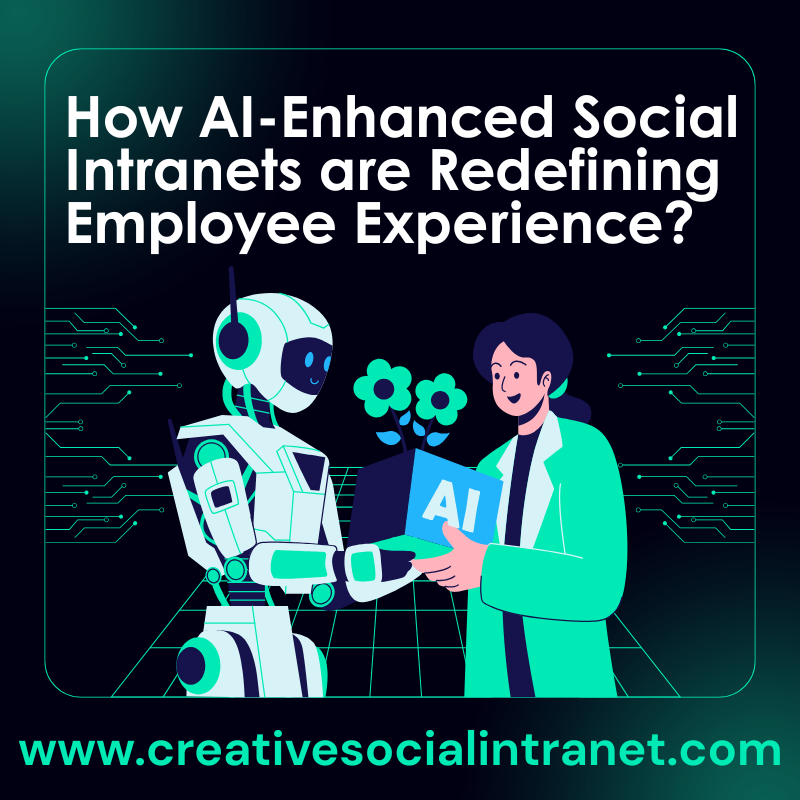
The modern workplace is undergoing a profound transformation. Hybrid teams, fully remote roles, distributed global workforces, and digital-first communication are no longer trends—they are the new standard. As organizations adapt to this shift, the tools they use must evolve as well. Traditional intranet systems, once designed as simple digital notice boards for announcements and policy documents, are no longer capable of supporting today’s fast-moving, experience-driven workforce. Employees now expect speed, personalization, intuitive navigation, seamless collaboration, and real-time access to knowledge. This is where an AI-powered intranet software, Creative Social Intranet, is revolutionizing the employee experience. By blending artificial intelligence with … How AI-Enhanced Social Intranets are Redefining Employee Experience?