
What are the 5 questions to ask in a survey?
What are the 5 questions to ask in a survey?
Crafting effective survey questions is essential for obtaining meaningful and actionable insights from respondents. Whether conducting market research, gathering feedback from customers, or assessing employee satisfaction, selecting the right questions is crucial for achieving the survey’s objectives. While the specific questions may vary depending on the survey’s purpose and target audience, five key types of questions are commonly used across different survey contexts. In this comprehensive guide, we’ll explore each of these question types and provide examples to illustrate their effectiveness.
1) Multiple Choice Questions:
Multiple-choice questions provide respondents with a set of predefined answer options to choose from. They are straightforward to answer, making them ideal for gathering quantitative data and comparing responses across different groups. When crafting multiple-choice questions, it’s important to ensure that the answer options are exhaustive and mutually exclusive to avoid ambiguity.
Example: Question: Which of the following social media platforms do you use regularly? a) Facebook b) Twitter c) Instagram d) LinkedIn e) None of the above
2) Likert Scale Questions:
Likert scale questions measure the intensity of agreement or disagreement with a statement using a scale of response options, typically ranging from “strongly agree” to “strongly disagree.” These questions are widely used to assess attitudes, opinions, and perceptions, providing researchers with quantitative data that can be analyzed for trends and patterns.
Example: Question: Please indicate your level of agreement with the following statement: “The company values diversity and inclusion.” Strongly Agree | Agree | Neither Agree nor Disagree | Disagree | Strongly Disagree
3) Open-Ended Questions:
Open-ended questions allow respondents to provide free-form responses, expressing their thoughts, opinions, and experiences in their own words. Unlike closed-ended questions, open-ended questions offer flexibility and depth, enabling researchers to capture rich qualitative data and uncover insights that may not emerge from structured response options.
Example: Question: What factors do you consider when choosing a new smartphone? [Respondent provides written response]
4) Demographic Questions:
Demographic questions gather information about respondents’ characteristics, such as age, gender, education, income, and location. These questions help researchers segment and analyze survey data based on demographic variables, allowing for deeper insights into the preferences, behaviors, and needs of different demographic groups.
Example: Question: What is your age? a) 18-24 b) 25-34 c) 35-44 d) 45-54 e) 55-64 f) 65 or older
5) Net Promoter Score (NPS) Questions:
NPS questions measure customer loyalty and satisfaction by asking respondents to rate their likelihood of recommending a product, service, or brand to others on a scale from 0 to 10. Based on their responses, respondents are categorized into promoters (score 9-10), passives (score 7-8), or detractors (score 0-6), allowing organizations to calculate a Net Promoter Score that reflects overall customer sentiment.
Example: Question: On a scale from 0 to 10, how likely are you to recommend our company to a friend or colleague? 0 1 2 3 4 5 6 7 8 9 10
By incorporating a combination of these question types into a survey, researchers can gather comprehensive data that provides valuable insights into respondents’ opinions, attitudes, behaviors, and demographics. It’s important to design survey questions carefully, considering the survey’s objectives, target audience, and mode of administration, to ensure accurate and meaningful responses that drive informed decision-making.
Explore Creative Social Intranet
Boost Understanding with Quick Answers
Our Latest Intranet News and Articles
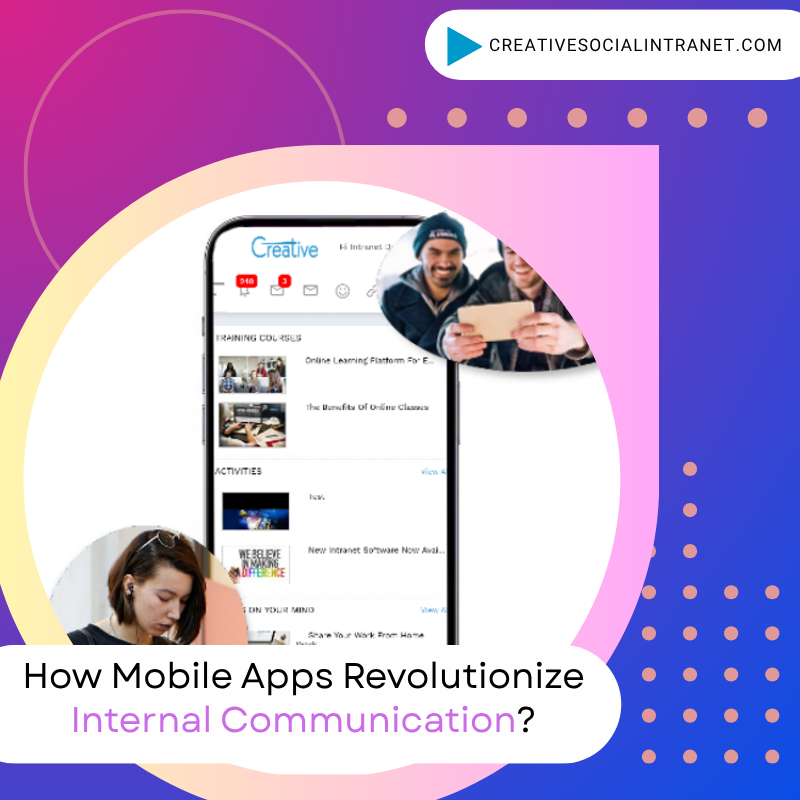
How AI-Powered Mobile Apps Are Transforming Internal Communication?
In today’s fast-paced digital workplace, effective internal communication is more important than ever. Organizations with distributed teams, remote workers, and multiple departments need tools that allow information to flow quickly and clearly. Traditional communication methods, such as email, static portals, and disparate messaging tools, often lead to confusion and information overload. This is where AI-powered mobile applications, combined with platforms like Creative Social Intranet, are changing the way companies communicate internally. These smart digital solutions make communication faster, more personalized, and easier to manage across the entire organization. A Creative Social Intranet powered by AI-driven mobile apps enables employees to … How AI-Powered Mobile Apps Are Transforming Internal Communication?
How AI-Enhanced Social Intranets are Redefining Employee Experience?
The modern workplace is undergoing a profound transformation. Hybrid teams, fully remote roles, distributed global workforces, and digital-first communication are no longer trends—they are the new standard. As organizations adapt to this shift, the tools they use must evolve as well. Traditional intranet systems, once designed as simple digital notice boards for announcements and policy documents, are no longer capable of supporting today’s fast-moving, experience-driven workforce. Employees now expect speed, personalization, intuitive navigation, seamless collaboration, and real-time access to knowledge. This is where an AI-powered intranet software, Creative Social Intranet, is revolutionizing the employee experience. By blending artificial intelligence with … How AI-Enhanced Social Intranets are Redefining Employee Experience?
Gartner Insight 24 Feb 2026
A modern company intranet must enable AI-native development so small teams can build, collaborate, and innovate faster using generative AI. It should also provide centralized governance and visibility as organizations adopt AI-driven analytics and high-performance computing. With increasing data sensitivity, protecting information while it is actively in use through confidential computing is no longer optional. Creative Social Intranet brings these capabilities together in a secure, on-premise environment designed for real enterprise needs. It allows organizations to adopt AI confidently while maintaining control, compliance, and data security across all internal operations. The evolving role of the Chief Information Officer (CIO) in … Gartner Insight 24 Feb 2026