
Internal communication

Why Does Your Company Need a Social Intranet for Faster and Smarter Communication?
Why Does Your Company Need a Social Intranet for Faster and Smarter Communication?
In today’s fast-moving digital workplace, communication plays a crucial role in the success of any organization. Teams often work across different departments, locations, and even time zones, making efficient communication more important than ever. Traditional communication tools, such as email and scattered messaging platforms, can create confusion, slow down decision-making, and reduce productivity. This is where a Creative Social Intranet becomes a powerful solution. A social intranet provides a centralized platform where employees can collaborate, share information, access company resources, and communicate seamlessly. By integrating social networking features with workplace tools, a social intranet transforms the way organizations operate and Why Does Your Company Need a Social Intranet for Faster and Smarter Communication?
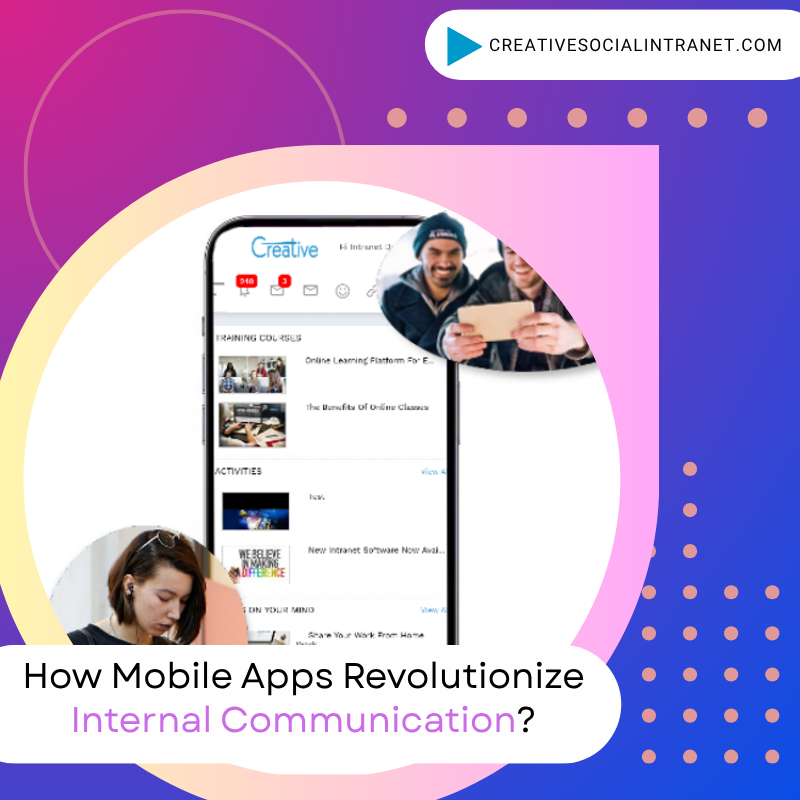
How Mobile Apps Revolutionize Internal Communication

How AI-Powered Mobile Apps Are Transforming Internal Communication?

In today’s fast-paced digital workplace, effective internal communication is more important than ever. Organizations with distributed teams, remote workers, and multiple departments need tools that allow information to flow quickly and clearly. Traditional communication methods, such as email, static portals, and disparate messaging tools, often lead to confusion and information overload. This is where AI-powered mobile applications, combined with platforms like Creative Social Intranet, are changing the way companies communicate internally. These smart digital solutions make communication faster, more personalized, and easier to manage across the entire organization. A Creative Social Intranet powered by AI-driven mobile apps enables employees to How AI-Powered Mobile Apps Are Transforming Internal Communication?

From Emails to Mobile Apps A New Era of Company Communication

From Emails to Mobile Apps: A New Era of Company Communication

In the past, emails were the backbone of corporate communication. They were formal, reliable, and convenient for exchanging information within organizations. However, as the modern workplace evolved, with hybrid teams, instant messaging, and real-time collaboration, emails began to reveal their limitations. Slow response times, long threads, and cluttered inboxes made communication less efficient and more fragmented. Today, we’ve entered a new era where mobile apps and intelligent intranet systems, such as Creative Social Intranet, are transforming the way companies communicate, connect, and collaborate. They offer speed, accessibility, and engagement that emails can’t match, paving the way for smarter, more connected From Emails to Mobile Apps: A New Era of Company Communication

Why Mobile Intranet Solutions Are the Future of Workplace Communication?

Why Mobile Intranet Solutions Are the Future of Workplace Communication?

In today’s rapidly evolving digital workplace, communication has become more dynamic, fast-paced, and decentralized than ever before. Employees no longer rely solely on desktops or traditional communication tools to stay connected. Instead, mobile devices have become the heartbeat of modern work culture. With remote work, hybrid models, frontline employees, and global operations becoming the norm, organizations need smarter, more flexible solutions to keep their teams informed and engaged. This is why mobile intranet solutions are emerging as the future of workplace communication—centralizing information, streamlining workflows, and ensuring seamless collaboration across every location and device. One platform leading this transformation is Why Mobile Intranet Solutions Are the Future of Workplace Communication?

Internal Communications

An Internal Communication Strategy that Will Give Results

In today’s dynamic and scattered work environment, achieving business goals relies heavily on an effective internal communication strategy. This goes beyond simply crafting the right message or picking the best communication channel. It’s about crafting a compelling story that unifies everyone in your organization, from leadership to frontline employees. This blog will guide you through developing a successful internal communication strategy and identify key areas to monitor for ongoing improvement. Why do Companies need an Internal Communication Tool? Companies need internal communication tools for several reasons: 1. Improved Communication & Collaboration: These apps break down silos between departments, fostering faster An Internal Communication Strategy that Will Give Results

Looking for a way to stay connected and organized in the workplace? Intranet software is the perfect solution. It provides an easy-to-use platform that allows you to share information, has conversations, and interact with coworkers. Plus, it reduces clutter by eliminating emails and ensures that valuable knowledge doesn’t get lost when people leave the organization. By converting your workplace into a digital ecosystem, intranet software can help improve internal communication, increase employee engagement and onboarding, and make sure everyone stays informed about all the important things happening at work. Get connected today!

Effective internal communication is the lifeblood of any organization, fostering collaboration, alignment, and a sense of belonging among employees. It encompasses the exchange of information, ideas, and feedback across all levels and departments of the organization. A robust internal communication strategy involves not only the tools and channels used to disseminate information but also the culture and practices that encourage open dialogue and transparency.

Central to successful internal communication is the use of diverse communication channels tailored to the organization’s needs and preferences. This may include email, instant messaging platforms, intranet portals, team meetings, and town hall sessions, among others. By leveraging a mix of synchronous and asynchronous communication methods, organizations can ensure that information reaches employees in a timely manner and accommodates different working styles and preferences.

Moreover, effective internal communication goes beyond just transmitting information; it also fosters engagement, collaboration, and a shared sense of purpose among employees. Through clear and consistent messaging from leadership, opportunities for two-way dialogue, and platforms for sharing successes and challenges, organizations can cultivate a culture of trust, empowerment, and inclusivity. By prioritizing internal communication as a strategic imperative, organizations can enhance employee morale, productivity, and ultimately, achieve their business objectives more effectively.